
Sarasota Garage Door Guide
Why Sarasota Garage Doors Draft Long Before They Break
Sarasota homes built between 1964 and 2012 lose their garage door seal to sun and humidity long before the springs go. Here's what actually happens and when.
- Licensed & Insured
- Same-Area Service Calls
- Upfront Pricing
What Most People Get Wrong
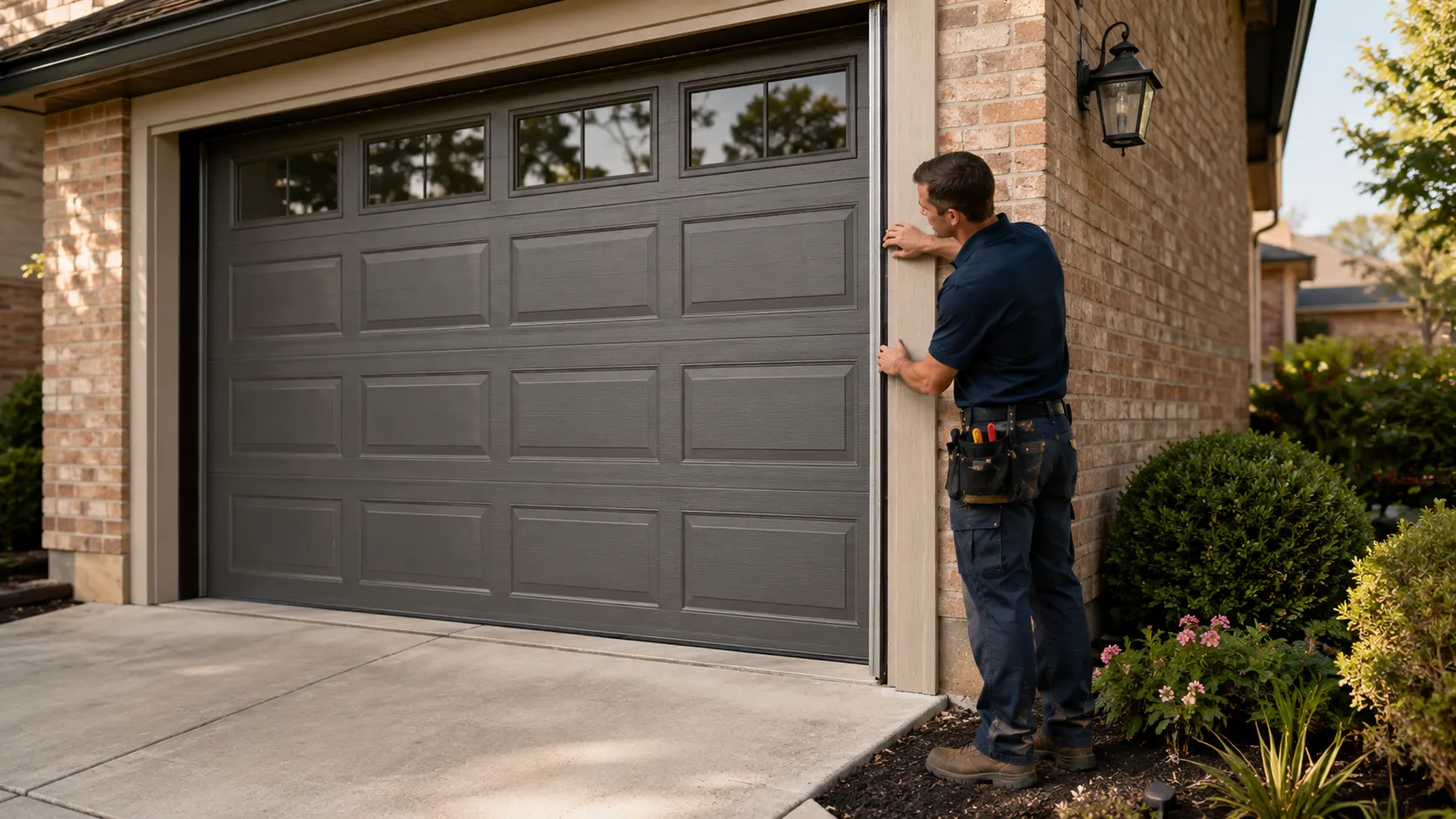
Most homeowners call about a noisy opener or a spring that finally let go, and never think about the strip of rubber running along the bottom of the door until they notice sand, water, or a line of light coming through underneath. That bottom seal and the side weather seals are doing more work here than in most parts of the country, because Sarasota's housing stock skews older than people assume. With a median build year of 1977, a lot of doors in the service area are original hardware on original tracks, and the seal channel that holds the rubber gasket was never designed to handle sixty years of sun exposure.
People replace springs and openers and leave the seal cracked and shrunk, which means the draught, the bugs, and the water intrusion never actually stop. The seal is cheap. Ignoring it while fixing everything else around it is the actual mistake, not any one broken part.
What Is Going On
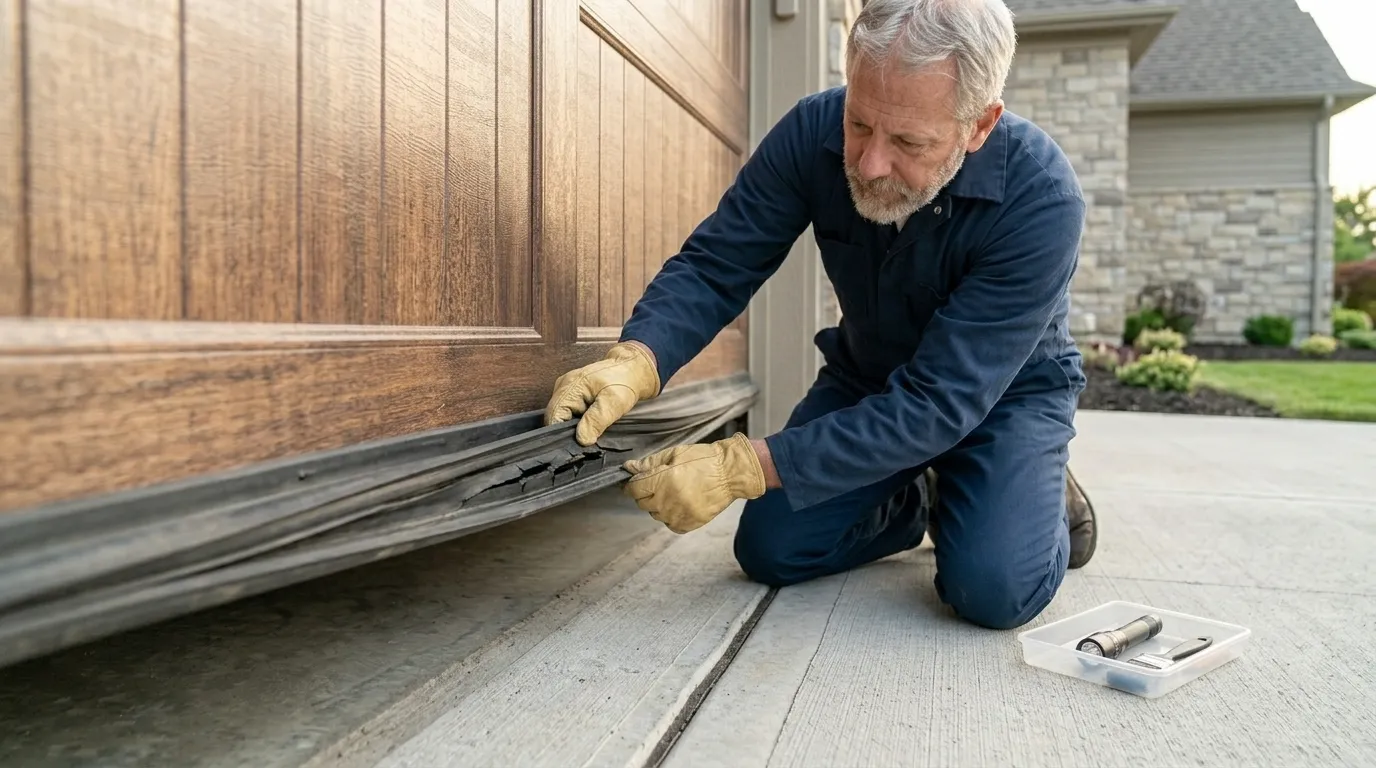
Across the 32 named areas that make up this service area, the bulk of the housing went up in the 1960s and 70s, with construction continuing steadily through 2012. Older doors in neighborhoods like Southgate and Desoto Acres often still run the original bottom astragal seal, a strip that gets brittle and pulls away from the panel after enough seasons of UV and heat. Newer builds nearer the edge of that 1964-2012 range tend to have deeper seal channels that hold up longer, but they're not immune either.
Vinyl and rubber both harden with age no matter when the door went in, and once the seal loses its flex it stops sealing against a slab that's rarely perfectly level to begin with. The gap that opens up isn't dramatic. It's a quarter inch here, an eighth there, along the bottom and both sides, and it adds up to a door that whistles in wind and lets water track in during heavy rain.
Season by Season
Sarasota sits in a mild temperate band, so there's no freeze-thaw cycle cracking the rubber the way it would further north, but the seal still takes a beating from heat and humidity swings through the year. In the hotter, wetter stretch of the year, the rubber softens and can pull loose from the retainer track under its own weight, and standing water at the threshold works its way under a seal that's already lifted. In the drier, cooler months the same rubber shrinks slightly and stiffens, which is when the gaps at the corners of the door show up most and the draught actually becomes noticeable inside the garage.
Because the climate here doesn't swing to hard extremes, seals in this area often look fine for years past when they've actually stopped sealing. Nobody notices until a hard rain finds the gap or a cold snap makes the draught obvious against bare feet on the slab.
How Local Conditions Play In
A door installed when the neighborhood was built in the 1960s or 70s is running seal hardware two or three generations behind what's sold today, and matching the channel width on an original frame isn't always a drop-in job. That's the honest limitation: on some of the older doors we look at, off-the-shelf seal isn't a perfect fit, and the fix is either a track adapter or, if the frame's warped enough from decades of heat, a full seal retainer replacement rather than just swapping the rubber. In North Sarasota and Desoto Acres, both within a few miles of downtown, we see this on original doors more often than in the newer stock further out toward Lakewood Ranch or Palmetto.
The fix itself is straightforward once you know which situation you're in. The part that takes judgment is knowing whether the door and track are still square enough for a standard seal to do its job, or whether the draught is really a symptom of something the seal alone won't fix.
How We Can Help
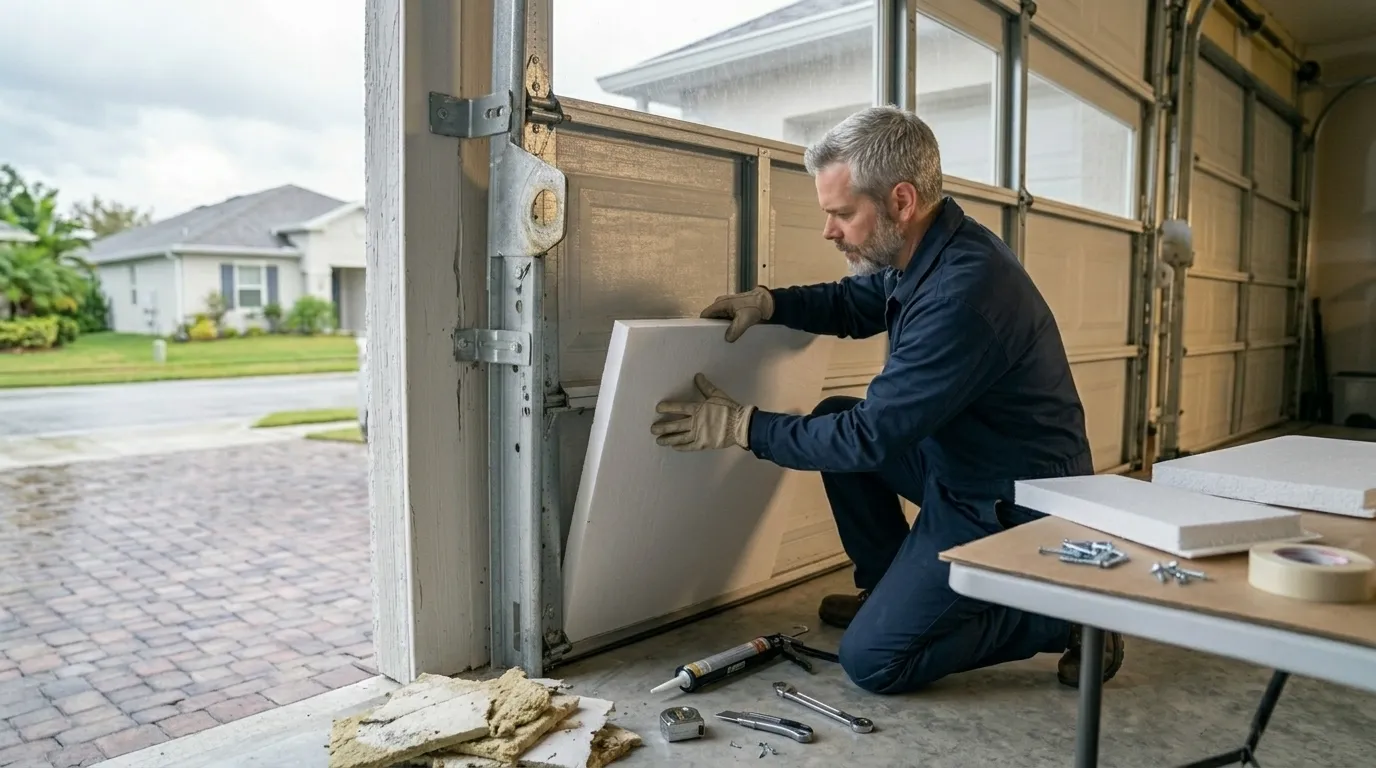
Garage Door Repair
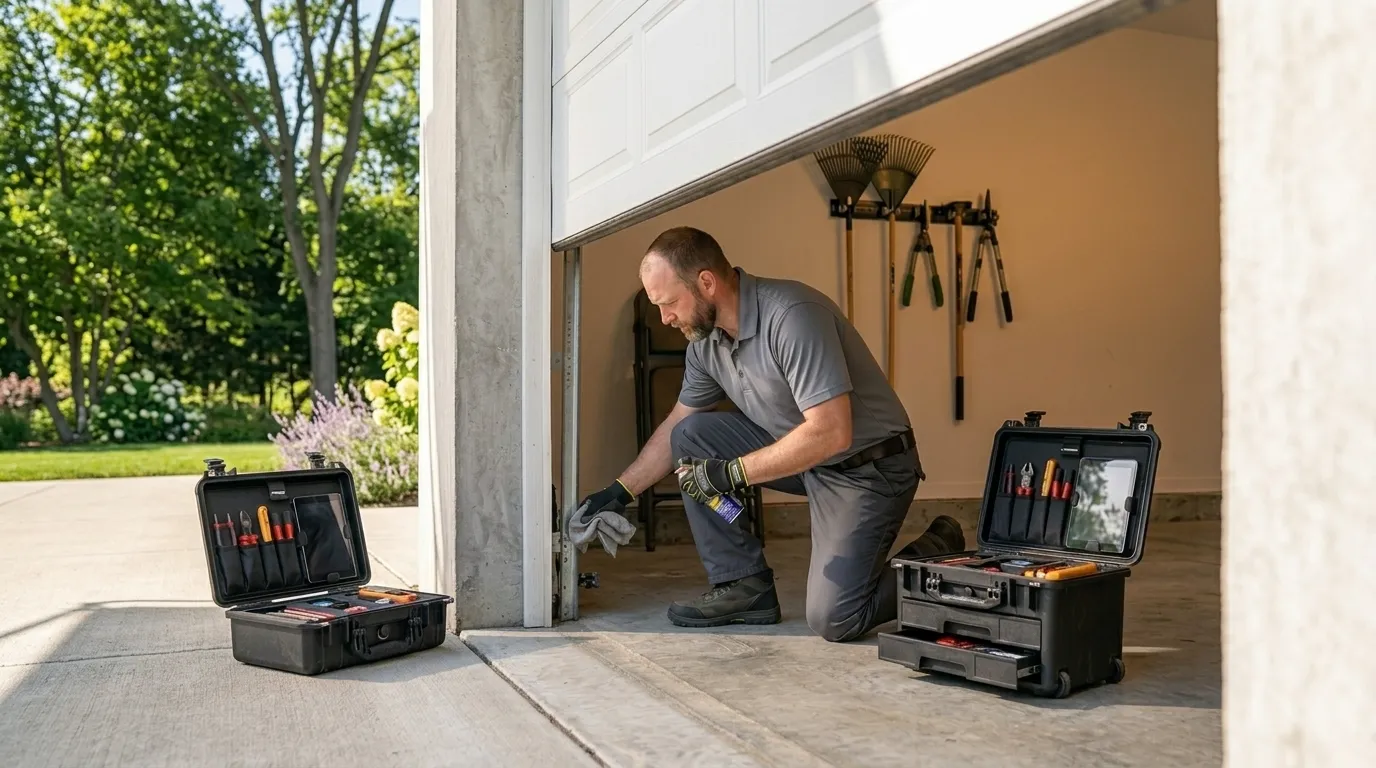
Springs, cables, tracks, rollers, and openers fixed by a tech who explains the problem before touching anything.
Learn more →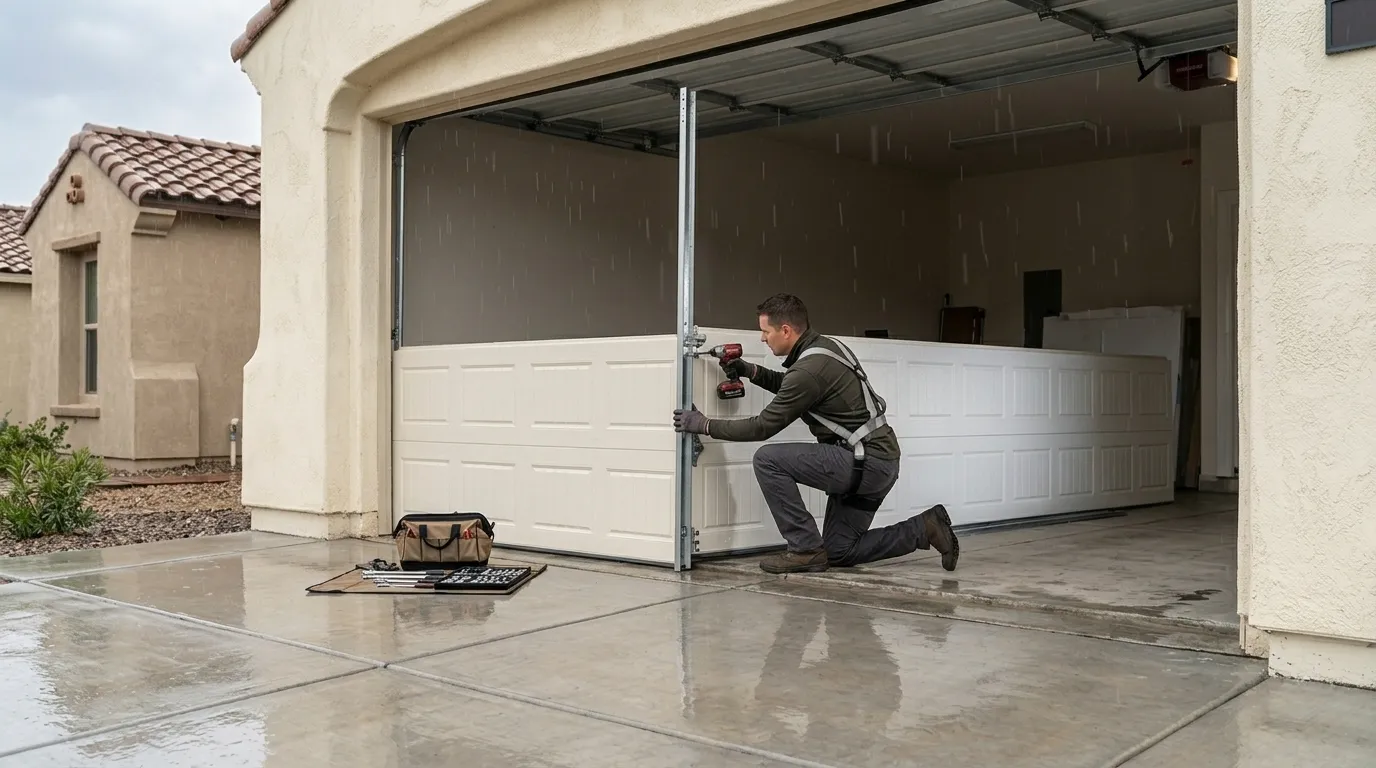
Garage Door Installation
New sectional doors sized and installed for the housing stock actually built in this area.
Learn more →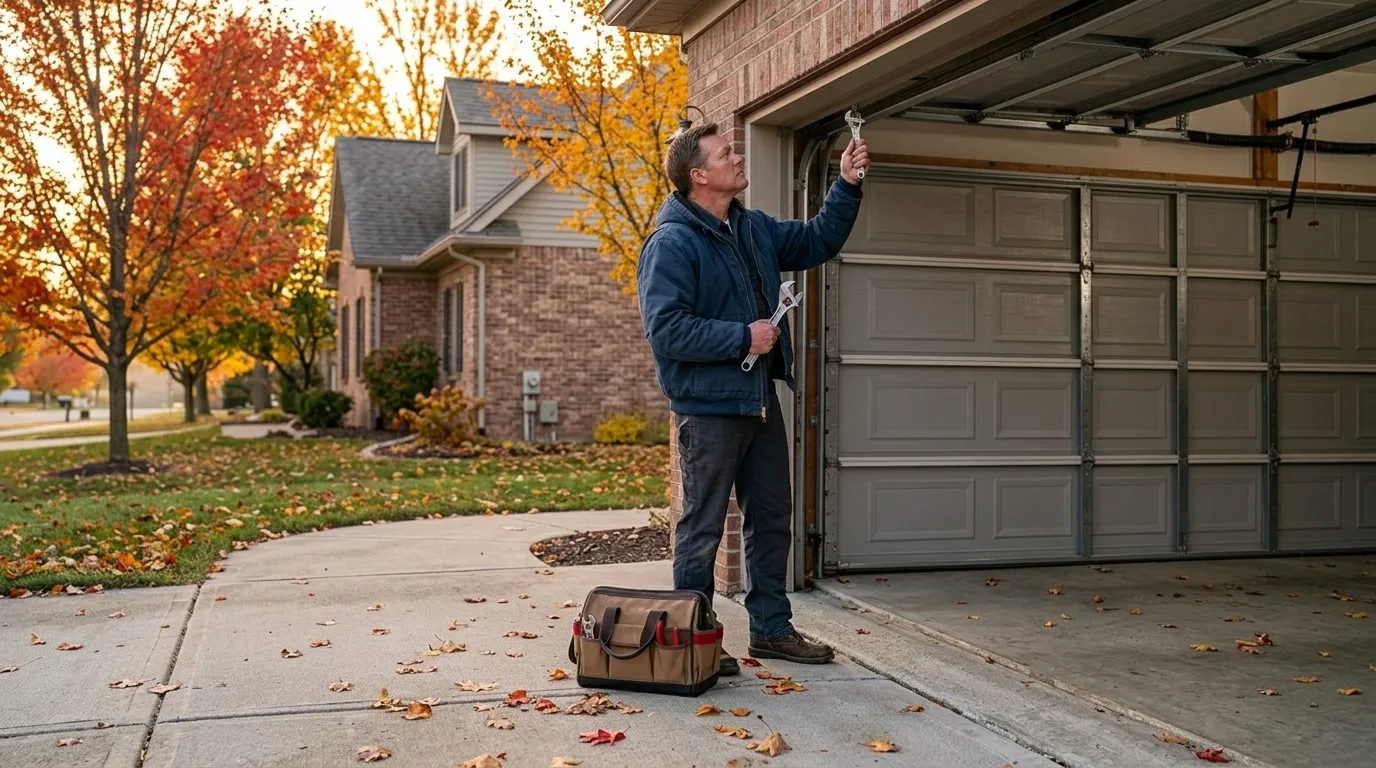
Garage Door Service
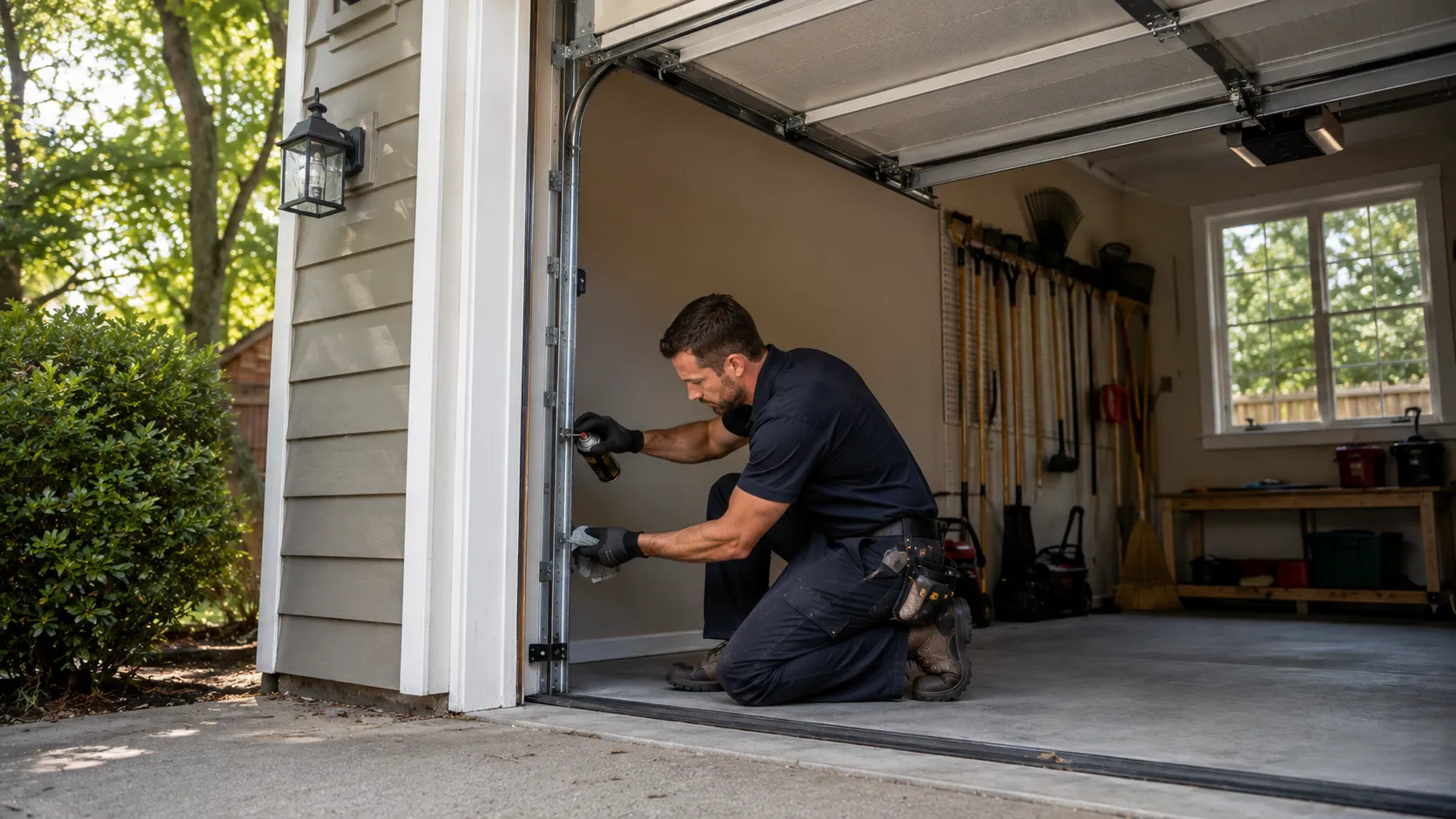
Tune-ups, lubrication, and safety checks that catch a small problem before it becomes a service call.
Learn more →Frequently Asked Questions
Why does my garage door let in water only when it rains hard?
That's usually a bottom seal that's shrunk or pulled loose from its track, common on older doors in this area built before seal channels got deeper. Light rain doesn't have the pressure to find the gap, but a hard, wind-driven rain pushes water straight under it. Replacing the bottom astragal fixes most of these; a warped panel underneath is the exception.
Is a whistling garage door a sign something's about to break?
Not usually a spring or opener issue. Whistling is almost always air moving through a gap in the side or top weather seal, common once the rubber hardens with age. It's worth fixing for comfort and to keep dust and insects out, but it's not an emergency the way a broken spring is.
How do I know if my door's original to the house?
If your neighborhood went up in the 1960s or 70s and the door hardware looks dated - narrow track, older style seal channel - there's a decent chance it's original or close to it. We can tell you more once we've looked at the track and channel width in person.
Will a new seal fix a draughty door on an older frame?
Sometimes, not always. If the frame or track has warped over the decades, a standard seal won't seat right no matter how new it is, and the fix is a track adapter or retainer replacement instead. We'll tell you which situation you're in before we sell you a part that won't solve it.
Have a Door That Needs a Second Opinion?
Call and describe what it is doing - we will tell you what it likely is.