
Sarasota Garage Door Guide
What Your Garage Door Is Trying to Tell You in Sarasota
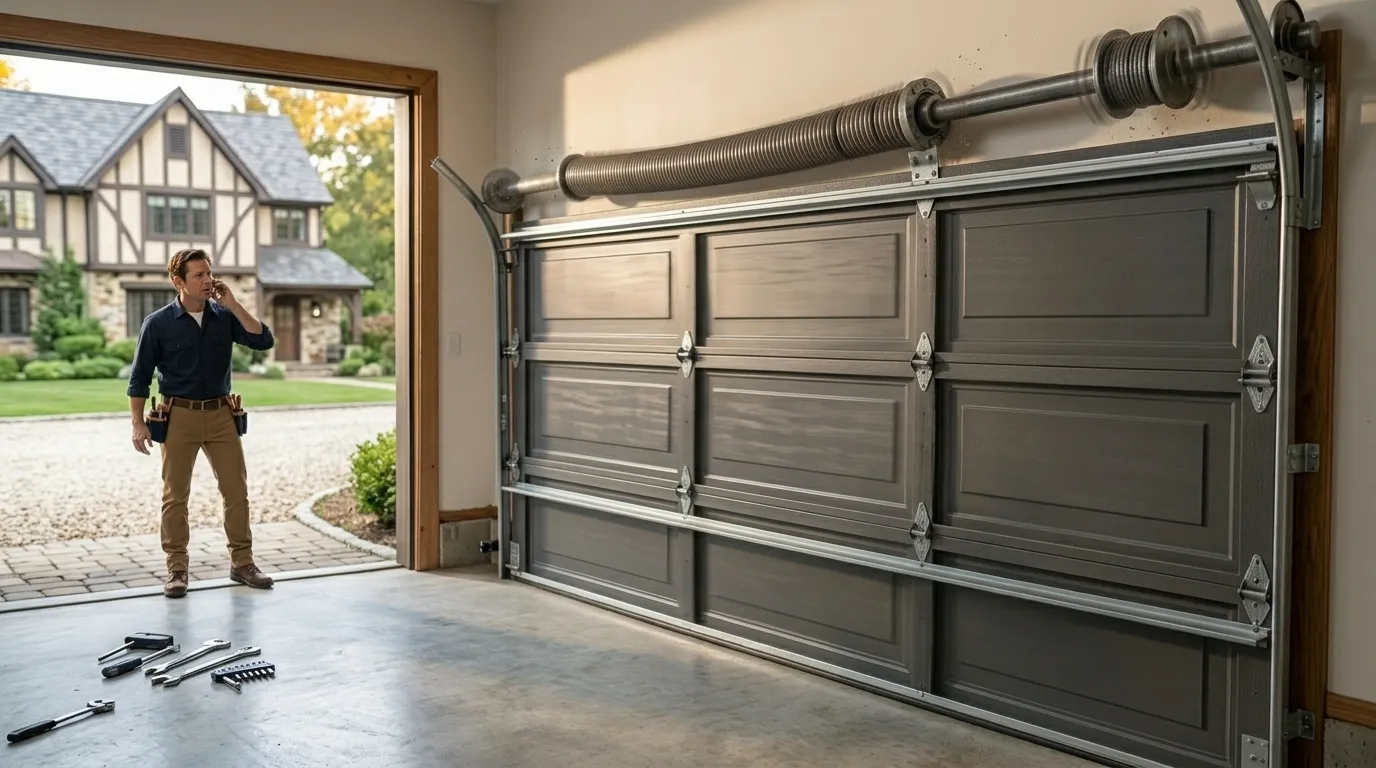
A grinding, popping, or slapping garage door isn't just old age. In a Sarasota home built between 1964 and 2012, each sound points to a specific worn part.
- Licensed & Insured
- Same-Area Service Calls
- Upfront Pricing
What Most People Get Wrong
Most people hear a new noise and assume the door is just getting old, so they wait. That's a reasonable guess in a lot of places, but not here. Housing across this service area was built mostly between 1964 and 2012, with the median right around 1977.
That means a large share of doors in North Sarasota, Southgate, Desoto Acres, and the other neighborhoods nearby are running on hardware that's forty-plus years old, or on a replacement door installed on forty-plus-year-old track and jamb hardware. A squeal that would be nothing on a five-year-old opener is often a spring or roller at the end of its life on a house this age.
The other mistake is treating every noise the same way - spraying WD-40 on it and moving on. Different sounds come from different parts, and some of them are warning signs, not annoyances.
A grinding opener gear is not the same problem as a popping torsion spring, and one of those two can put a 150-pound door on the floor. Waiting to see if a noise "goes away" is the single most common reason a routine fix turns into an emergency call.
What Is Going On
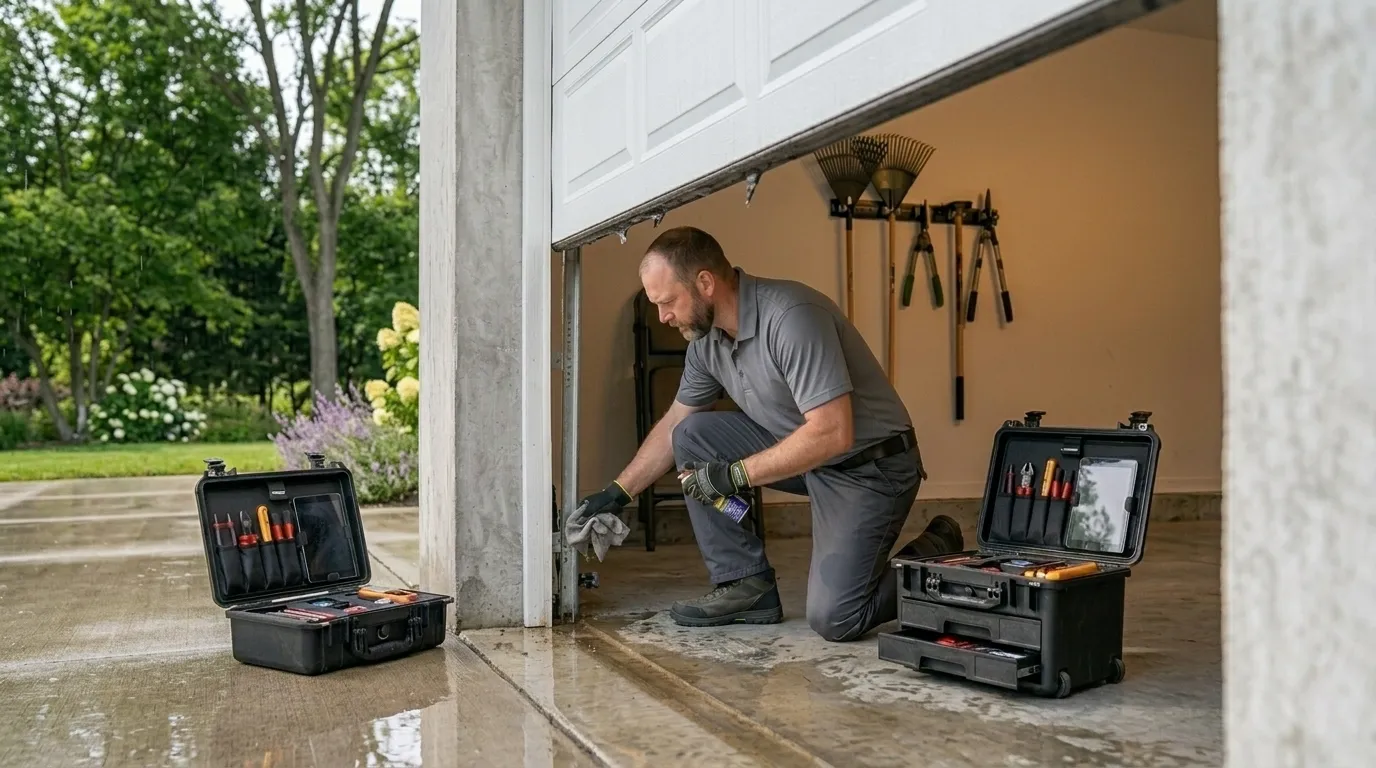
On houses from this stretch of housing stock - 1960s and '70s construction is the dominant era across the 32 named areas we work in - the noise almost always traces back to one of three things: rollers, the torsion spring, or track alignment. Steel rollers on original hardware wear down and start rattling in the track years before they fail outright; that's the rhythmic clack-clack-clack you hear as the door moves.
A spring nearing the end of its cycle count makes a duller, heavier groaning sound, sometimes with a slight shudder at the top or bottom of travel. Track that's shifted slightly out of alignment - common after decades of small settling - produces a scrape or a metal-on-metal squeal that gets louder, not softer, over time.
We can't tell you which one it is without looking at the door, and we won't pretend a phone description is a diagnosis. What we can say is that on a house from this era, a new noise is worth a look within a week or two, not a month. Small hardware issues on original-era doors don't fix themselves, and they rarely stay small.
Season by Season
This area sits in a mild temperate band, which is a break most homeowners elsewhere don't get - no hard freeze-thaw cycle putting stress on tracks and panels every winter, no metal contracting and expanding in dramatic swings. That's real, and it means garage door hardware here tends to fail from age and use rather than from weather shock.
What that also means is that noise changes across the year are usually not a weather story, they're a wear story. If a door that's been quiet for months suddenly starts talking in a given season, it's more likely that a part crossed its wear threshold than that the weather did anything to it. We're not going to invent a seasonal storm pattern or a humidity spike to explain it, because that's not what's driving it here.
The honest answer is: mild climate means the calendar matters less than the odometer. A door on hardware from the 1970s is going to start making noise eventually regardless of which month it happens to be, and pinning it on the season instead of the hardware just delays the fix.
How Local Conditions Play In
The area we cover runs from North Sarasota and Downtown out through Southgate, Desoto Acres, Siesta Key, Bee Ridge, Lakewood Ranch, and more than two dozen other named neighborhoods, and the housing mix across that stretch isn't uniform. Some pockets skew toward the earlier end of the 1964-2012 build range, some toward the later end, and the noise a door makes tends to track that. A door on a house near the older end of the range is more likely making the deep, worn-spring groan; a door on newer construction closer to 2012 is more often a track or opener-gear issue rather than a spring at end of life.
With 59,239 owner-occupied houses and a median household income of $77,359 across the service area, the repair-versus-replace call is a real budget question for most people here, not an abstract one. We'll tell you straight when a noisy door is a $150 roller swap and when the spring and track are both far enough gone that replacement makes more sense than chasing repairs on decades-old hardware. That's not a sales pitch either direction - it's the honest math for a door this age.
How We Can Help
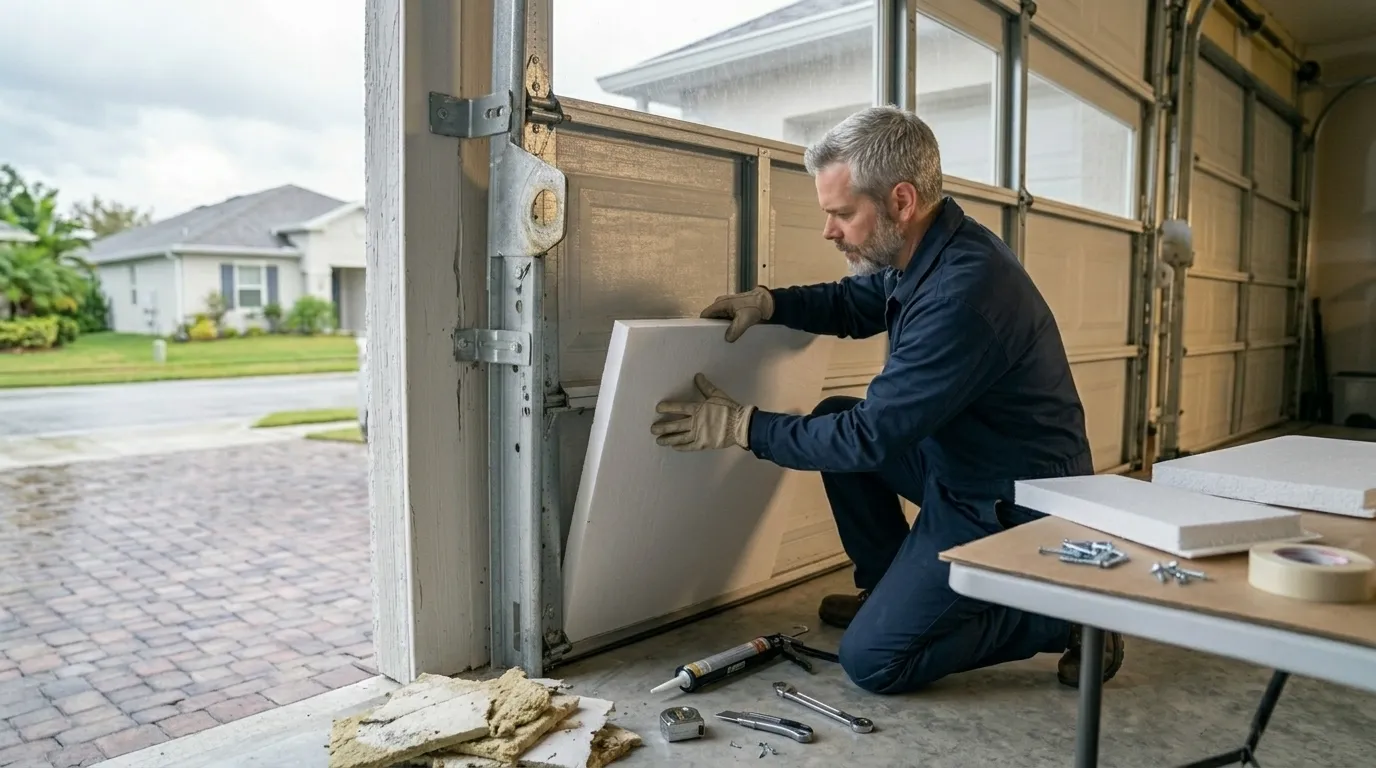
Garage Door Repair
Springs, cables, tracks, rollers, and openers fixed by a tech who explains the problem before touching anything.
Learn more →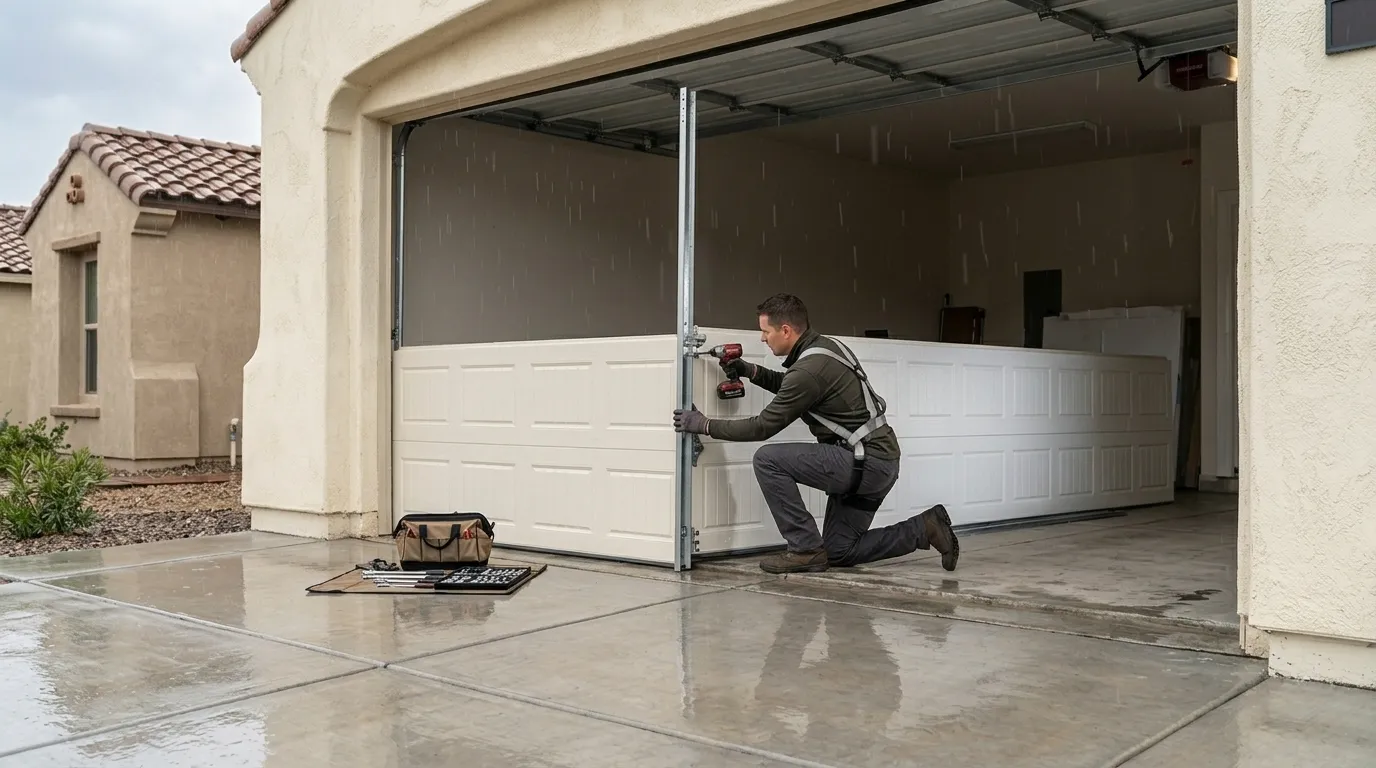
Garage Door Installation
New sectional doors sized and installed for the housing stock actually built in this area.
Learn more →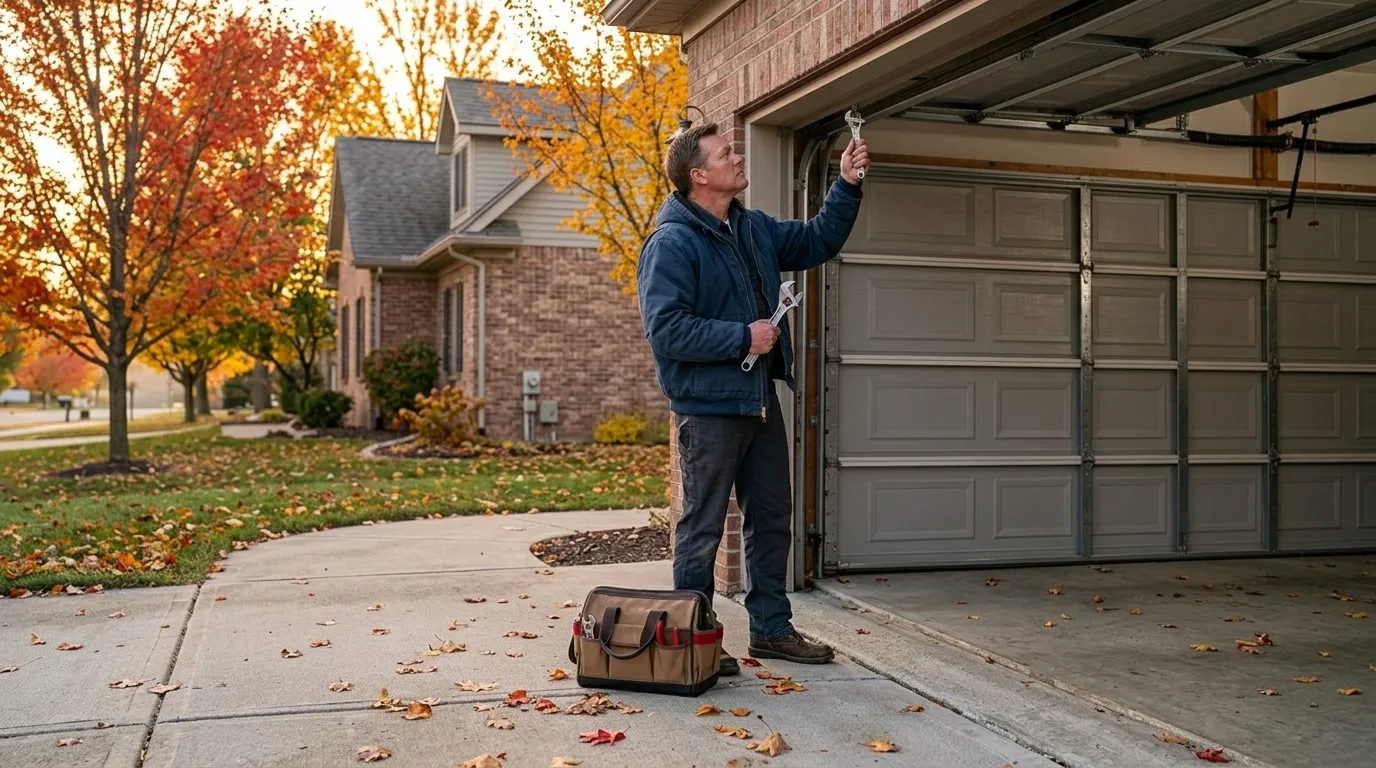
Garage Door Service
Tune-ups, lubrication, and safety checks that catch a small problem before it becomes a service call.
Learn more →Frequently Asked Questions
My garage door has started squealing every time it opens. Is that urgent?
It depends on the pitch. A high metal-on-metal squeal is usually rollers or track alignment and can wait a week or two. A deeper, groaning squeal near the top of the door's travel is more often a spring under strain, and on hardware from the 1960s-70s stock common in this area, that's worth a same-week look.
Why does my door only make noise sometimes?
Intermittent noise usually means a part is right at its wear threshold - a roller with a flat spot, a spring near its cycle limit. Given the mild, fairly steady climate here, it's rarely weather causing the on-and-off pattern. It's more likely load and use finally catching up with older hardware.
Is a loud garage door always a sign I need a new one?
No, and we won't tell you that just to sell a job. A lot of noise complaints on houses from this area's building era are a $100-200 roller or hinge fix. Full replacement makes sense when the spring, track, and opener are all showing age together, not from noise alone.
How old does a garage door have to be before noise is a real concern?
There's no single number, but doors and hardware installed anywhere near the 1977 median build year for this area are well past the point where noise should be ignored. At that age, a new sound is more likely a part failing than a part settling in.
Have a Door That Needs a Second Opinion?
Call and describe what it is doing - we will tell you what it likely is.